I just finished reading Brain Rules by John Medina. This is a great book about how the brain works. The website has some great intro videos and this presentation by Garr Reynolds also provides some highlights. GREAT BOOK!
Category: learning
-
Learning Visions: Making Six Sigma Training Fun
This is a “must read” post from Cammy Bean. If you design training and you’re not already subscribed to her blog – JUST DO IT. Do not pass go, do not collect $200. Go subscribe. Simply said, Cammy just “gets it”!
-
Pure Pedantry : Human brain implants with a sheet rather than an electrode
..and the march towards human/computer hybrids continues. 8-)
Pure Pedantry : Human brain implants with a sheet rather than an electrode
-
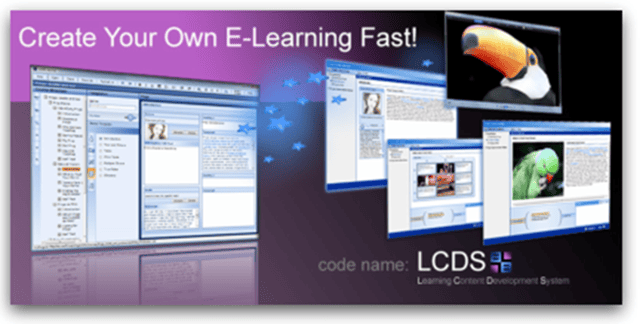
Free Microsoft Elearning Authoring Tool: Create Your Own E-Learning
 Has anyone seen this and tried it out yet? I notice it does NOT work in Firefox, but it looks like it MIGHT be worth a look. Can anyone comment on this either way? Good or bad?
LCDS -Learning Content Development System
-
edublogs: The Combinations Rule
This is right on target so I’ll just let it speak for itself.
 Stan’s right: this is the number one rule for any creative venture, including some of the best teaching that I ever received (and that I’ve seen practiced through the profession’s lens). The best teachers always seemed to know a lot about stuff that had nothing to do with the ‘subject’ in hand. They always knew the names of plants, birds, trees, obscure books and films.
edublogs: The Combinations Rule: underlines creative thought
-
31 Steps to Live to 100
Orginally posted at The Longevity Strategy: How to Live to 100 Using the Brain-Body Connection
Part One: Get the Longevity Attitude
1. Start looking forward to living to 100 years of age or older. The twenty-first century will be the age of the centenarian.
2. Discard negative stereotyped thinking about aging.
3. Assume the odds are in your favor. If we all discard our stereotyped ideas about aging, the question about longevity comes down to this: Is it reasonable to plan to live to be 100? What are the odds?
4. Develop the correct mental attitudes now to improve your chances of being a centenarian.
Part Two: The Long-Living Brain
5. Start learning now as much as you can about your brain. While we will live longer than any generation in history, the major advances in longevity in our lifetime are going to come from brain research.
6. Learn to foresee consequences. Pace yourself.
7. Use it or lose it. Take active measures now to combat disuse atrophy.
8. Learn to handle stress. Your brain alertness and longevity are going to depend on how well you handle stress.
9. Develop an optimistic attitude toward life. Optimists not only live better, they also live longer.
10. Try to modify personality traits known to be associated with early death and disability.
11. Try to develop and express a healthy sense of humor.
12. Be proud of your brain. As you grow older, your brain performs better in the areas that are most important for success in the last third of your life.
13. Nourish your brain through a lifetime of education.
14. Because the likelihood of becoming a centenarian depends on how successfully scientists can cure Alzheimer’s disease, stroke, heart disease, and cancer, learn as much as you can about preventing these obstacles to longevity.
Part Three: Use Your Brain for Longevity
15. Life is not a spectator sport; step out of the stands and do something now to increase your chances for a long life and change our national attitudes toward aging.
16. Invest in your family dimension.
17. Build in a backup plan; diversify your career from the very beginning.
18. Take advantage of your opportunity to wind up a millionaire.
19. Uplift yourself by doing some good for others. Dedicate yourself to making a contribution to society.
20. Nurture enlightened self-interest.
21. Play to win. Spice up your life with risk.
22. Flex your brain. As we grow older, we have to define our new standards for success. Develop a flair for dealing with this change.
23. Never retire. To paraphrase Winston Churchill: Never, never, never retire. Change careers, do something entirely different, but never retire.
24. Become computer-literate and learn to use e-mail lest you lose touch.
25. Don’t turn to the obituary page first. Loss is part of life. As we age, our friends and relatives may die or become disabled, but depression is not a natural response to such losses.
Part Four: Do Right by Your Body
26. Set priorities and stick to them, especially in regard to maintaining physical fitness. In the long run, it’s the best, most efficient strategy for a potential centenarian.
27. Eat for tomorrow. Establish eating habits that will hold you in good stead for the rest of your life.
28. Start your longevity program now, and do it one small step at a time.
29. Think of the possibilities. Why stop at 100? Why can’t humans live forever?
30. Don’t wait for a “magic bullet.” There is no such thing as a fountain of youth. Despite the promise of genetic research and other potential biological extenders of longevity, don’t neglect proven aids to living longer. Don’t be fooled into thinking longevity can be found in a bottle.
31. Keep up with research. Almost daily, scientific research is turning up findings relevant to longevity. It may well find application in your own lifetime.
-
Learning and Memory
This article from The Dana Foundation includes sections on the many modes of memory, the stages of memory and learning, the anatomy of memory, and memory, aging and disease
http://www.dana.org/news/brainhealth/detail.aspx?id=10020#Top
-
Knowledge Management Review: FOCUSING ON BEHAVIORS AND LEARNING AT SHELL
I participated in a KM / Enterprise 2.0 session with Royal Dutch Shell via APQC in which they shared a lot of great things about what they are doing in this arena. I found this article that captures very well what we covered in the session. I like that their focus is on the people and keeping the technology involved as simple and transparent as possible. I really believe that is a BIG key for successful adoption of these things. It’s got to be beneficial and easy to use — otherwise, why bother.
Knowledge Management Review: FOCUSING ON BEHAVIORS AND LEARNING AT SHELL
-
BOOKSTOREAD.COM
I just found this on Bookstoread.com. The purpose of the Top Ten Lists is to showcase the bookshelves of leaders in the field.
If you’re familiar with instructional design literature you’ll know most, if not all of these names. Allison Rossett, David Merrill, Jeroen Van Merrienboer & more! They each give their personal top 10 ID books. Great stuff!
This would be a great fit with Cammy Bean’s dialog with Dr. John Curry and others.

You must be logged in to post a comment.