
How Dual Coding Theory Explains (and Fixes) Your Biggest Learning Design Problem Your learners look glazed over. They’re reading ahead while you talk. Or they’ve checked out entirely. You know what they’re doing? Choosing. Read the slide or listen to you. Not both. They can’t. And it’s not their fault—it’s your design. Your Brain ProcessesContinueContinue reading “The Dual Coding Problem: Why Your Learners Keep Tuning You Out”
Category Archives: Learning Science Toolkit
Debunking Learning Styles: What The Research Really Says
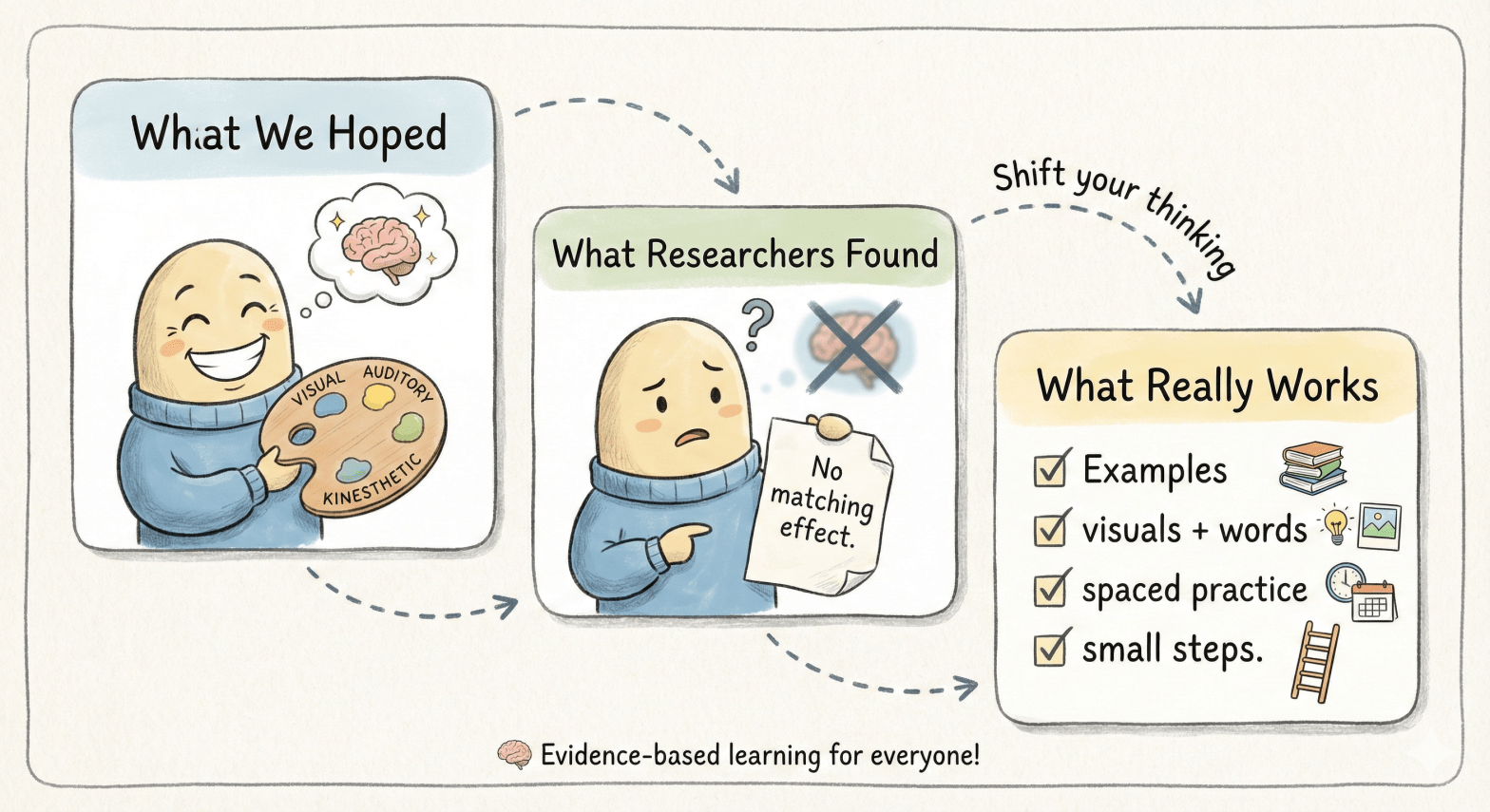
You’re in a kickoff meeting. Someone suggests, “Let’s find out everyone’s learning style first. Then we can tailor the training.” Heads nod. It sounds thoughtful. It sounds learner-centered.And you feel that small, nagging voice: Is this actually a thing? If you’ve been in L&D for a while, you’ve probably been in that room. It feltContinueContinue reading “Debunking Learning Styles: What The Research Really Says”
The Testing Effect: Why Retrieval Practice is Your Most Powerful Learning Tool
The Lie We Tell Ourselves Sarah’s quarterly review went well. Her compliance training program had a 94% completion rate. Everyone passed the quiz. Leadership was pleased. Three months later, a manager made a comment that clearly crossed the line. Nobody reported it. When HR investigated, five employees gave the same answer: “I didn’t know thatContinueContinue reading “The Testing Effect: Why Retrieval Practice is Your Most Powerful Learning Tool”
The Dangerous Allure of Distraction: Why Seductive Details Can Derail Learning (and When They Don’t)
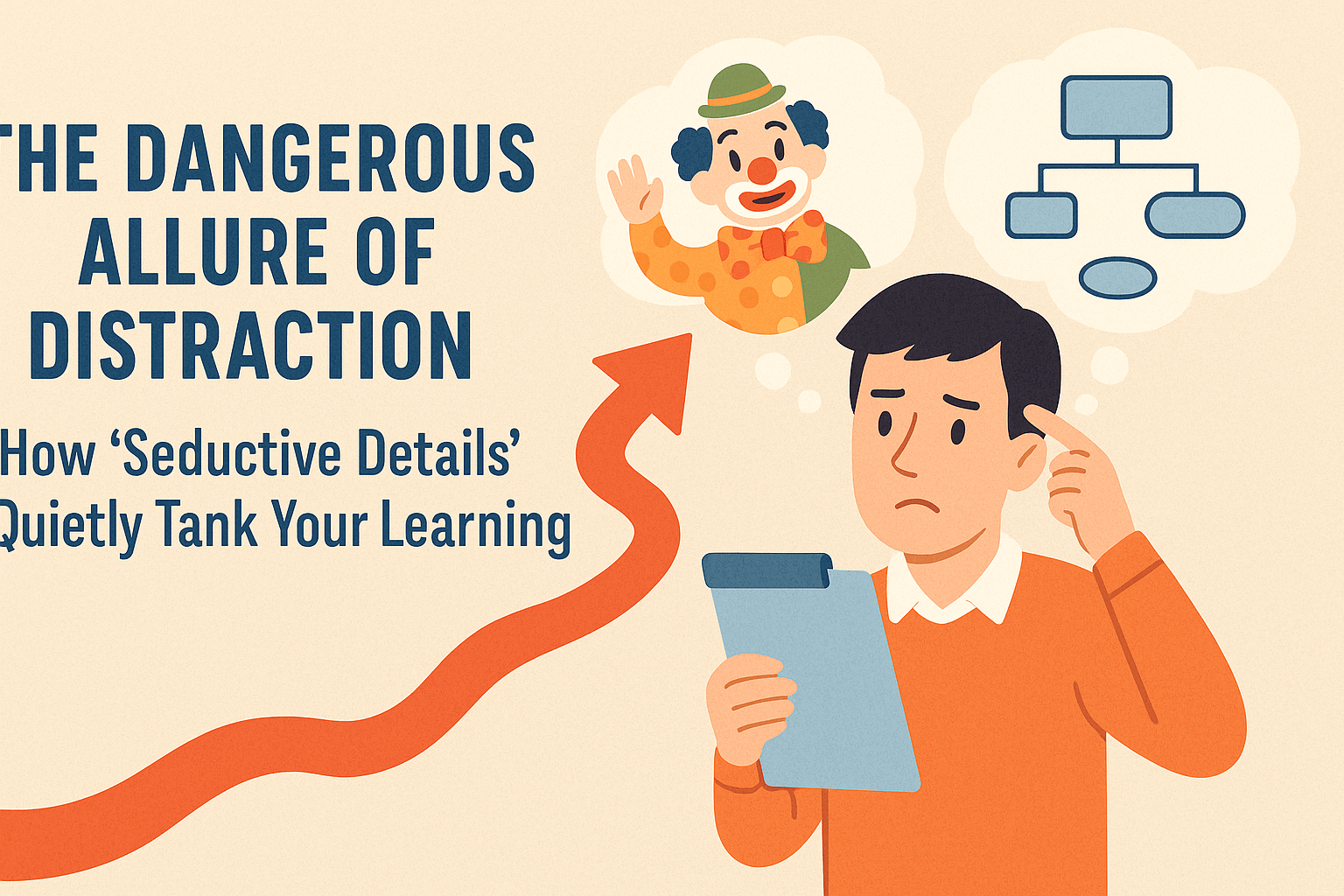
NOTE: I’ve updated this post from the previous version to incorporate some new research shared by Julie Dirksen & Will Thalheimer. Every learning designer knows the temptation. You’ve built a solid course… but it still feels a little flat.So you add a funny story.Or a dramatic photo.Or a splash of background music because “engagement!” AndContinueContinue reading “The Dangerous Allure of Distraction: Why Seductive Details Can Derail Learning (and When They Don’t)”
Why Harder is Better: The Surprising Science of Desirable Difficulties

The training session crushed it. Ninety-four percent completion. Satisfaction scores at 4.8 out of 5. Your VP sent a congratulatory email. Three months later? Those same learners failed the audit. Couldn’t recall key steps. Couldn’t apply the principles they’d supposedly mastered. What happened? You fell into what cognitive scientist Robert Bjork calls the fluency trap.ContinueContinue reading “Why Harder is Better: The Surprising Science of Desirable Difficulties”
 Mike Taylor