
How Dual Coding Theory Explains (and Fixes) Your Biggest Learning Design Problem Your learners look glazed over. They’re reading ahead while you talk. Or they’ve checked out entirely. You know what they’re doing? Choosing. Read the slide or listen to you. Not both. They can’t. And it’s not their fault—it’s your design. Your Brain ProcessesContinueContinue reading “The Dual Coding Problem: Why Your Learners Keep Tuning You Out”
Category Archives: L&D Field Guide
The Best L&D Books Are Not L&D Books
(A reading list that makes you useful, fast) When someone new to learning design asks a reasonable question: “What L&D books should I read?” They usually get a long list of L&D books.Models. Methods. Frameworks. More models. Helpful… up to a point. Because the real job of learning design isn’t “build a course.” It’s helpContinueContinue reading “The Best L&D Books Are Not L&D Books”
The Signaling Principle
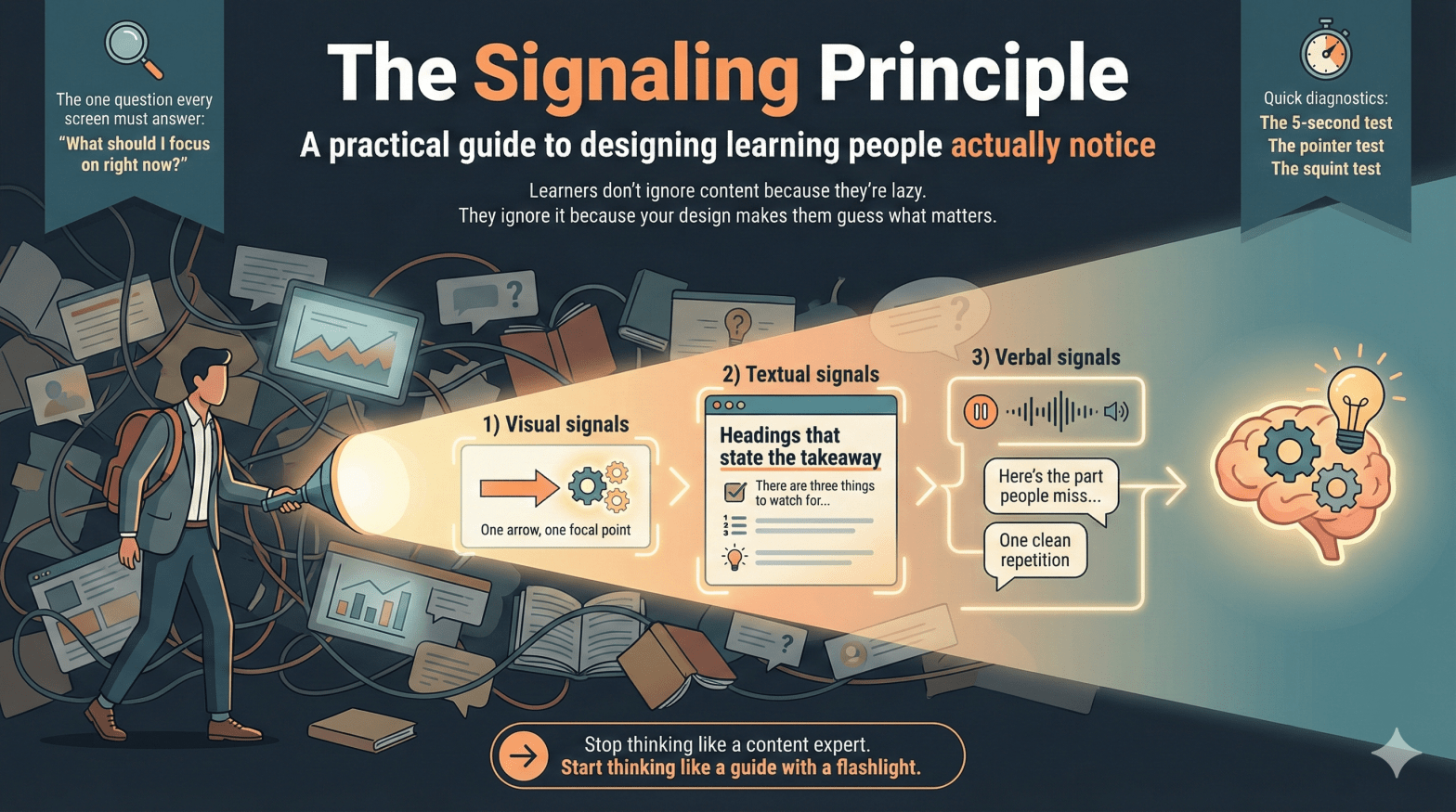
A practical guide to designing learning people actually notice Learners don’t ignore content because they’re lazy.They ignore it because your design makes them guess what matters. That’s the signaling principle (cueing). Signaling means you guide attention—on purpose.You make the important parts easy to spot and the unimportant parts easy to ignore. Why it works isContinueContinue reading “The Signaling Principle”
Most Instructional Designers Put This at the Start. Here’s Why YOU Shouldn’t!

You spent three weeks on that compliance module. Got the objectives perfectly clear. Slide two, exactly where Gagne said they should be. Your instructional design was textbook. Then you watched what happened: Learners skimmed the objectives and jumped ahead. Exit interviews revealed the pattern: “I knew what I was supposed to learn, so I didn’tContinueContinue reading “Most Instructional Designers Put This at the Start. Here’s Why YOU Shouldn’t!”
Debunking Learning Styles: What The Research Really Says
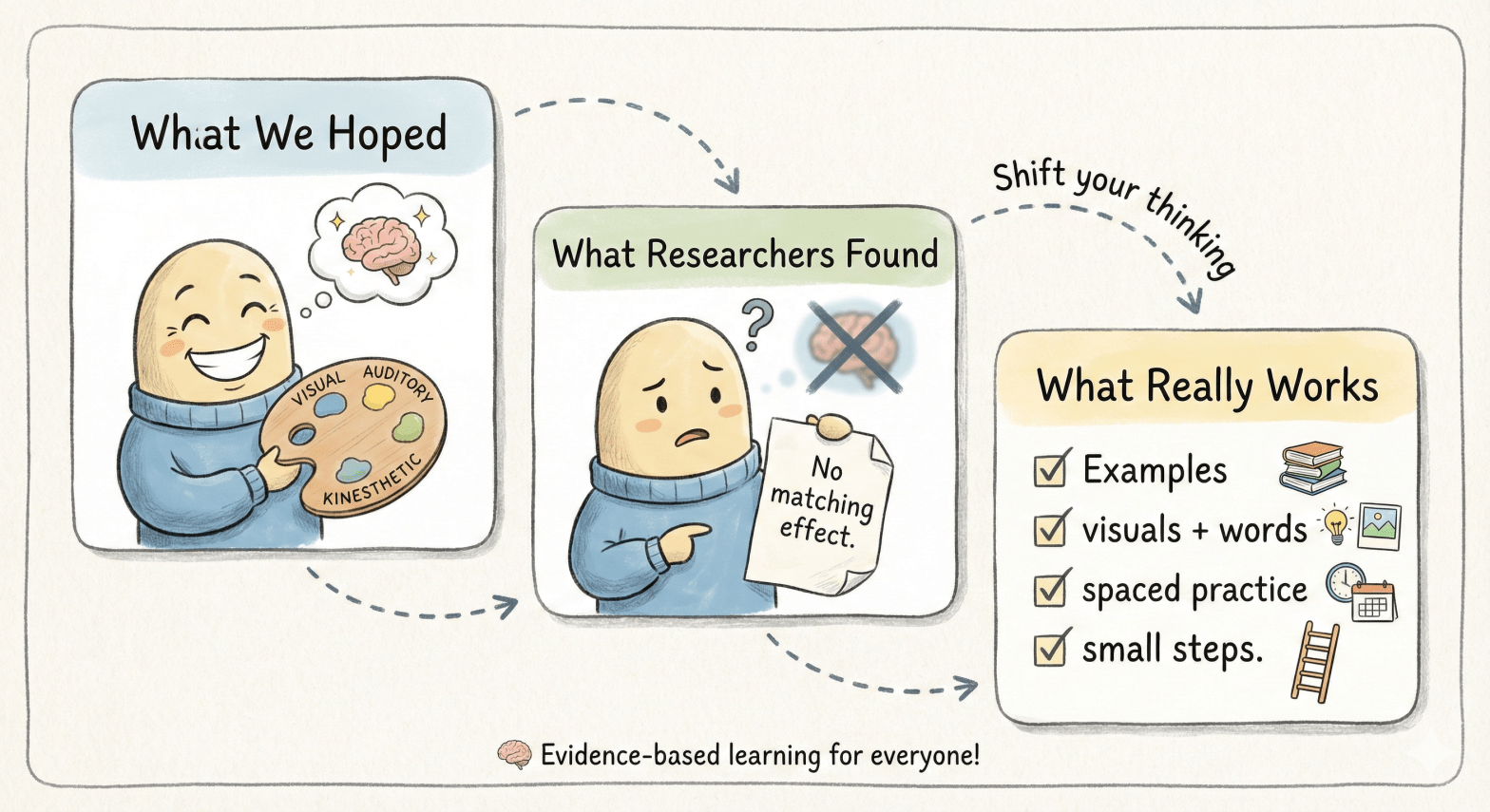
You’re in a kickoff meeting. Someone suggests, “Let’s find out everyone’s learning style first. Then we can tailor the training.” Heads nod. It sounds thoughtful. It sounds learner-centered.And you feel that small, nagging voice: Is this actually a thing? If you’ve been in L&D for a while, you’ve probably been in that room. It feltContinueContinue reading “Debunking Learning Styles: What The Research Really Says”
The Dangerous Allure of Distraction: Why Seductive Details Can Derail Learning (and When They Don’t)
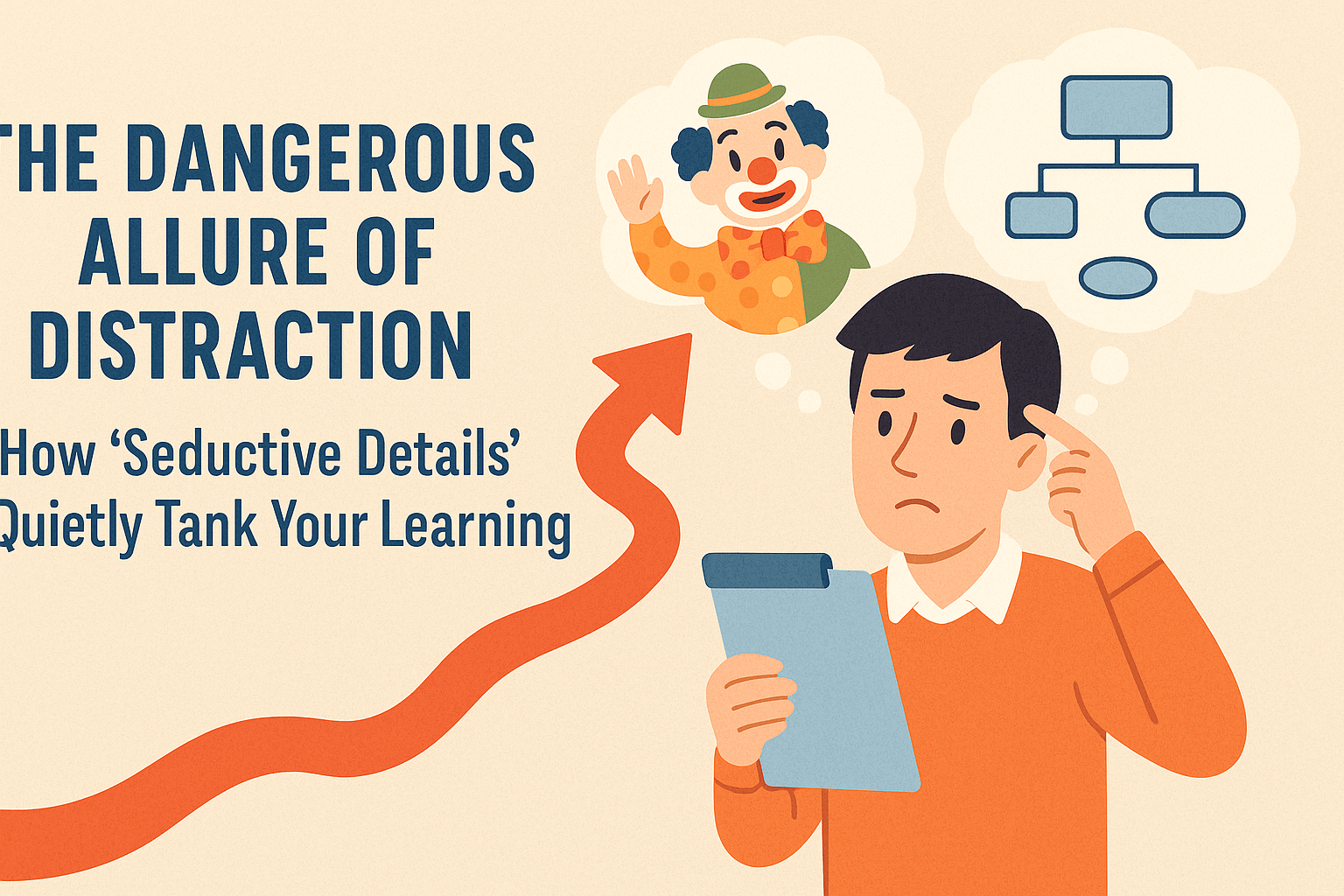
NOTE: I’ve updated this post from the previous version to incorporate some new research shared by Julie Dirksen & Will Thalheimer. Every learning designer knows the temptation. You’ve built a solid course… but it still feels a little flat.So you add a funny story.Or a dramatic photo.Or a splash of background music because “engagement!” AndContinueContinue reading “The Dangerous Allure of Distraction: Why Seductive Details Can Derail Learning (and When They Don’t)”
The Right Kind of Difficulty: Why Worked Examples Beat Practice for Novices

Evidence-Based L&D Series: Article 3 of 8 Picture Maria, three weeks into her new role as a financial advisor. Her manager has just assigned her first real client—a 52-year-old teacher who needs retirement planning. Maria opens the spreadsheet. Stares at it. Closes it. Opens the training manual. Scans for the formula. Tries a calculation. GetsContinueContinue reading “The Right Kind of Difficulty: Why Worked Examples Beat Practice for Novices”
 Mike Taylor