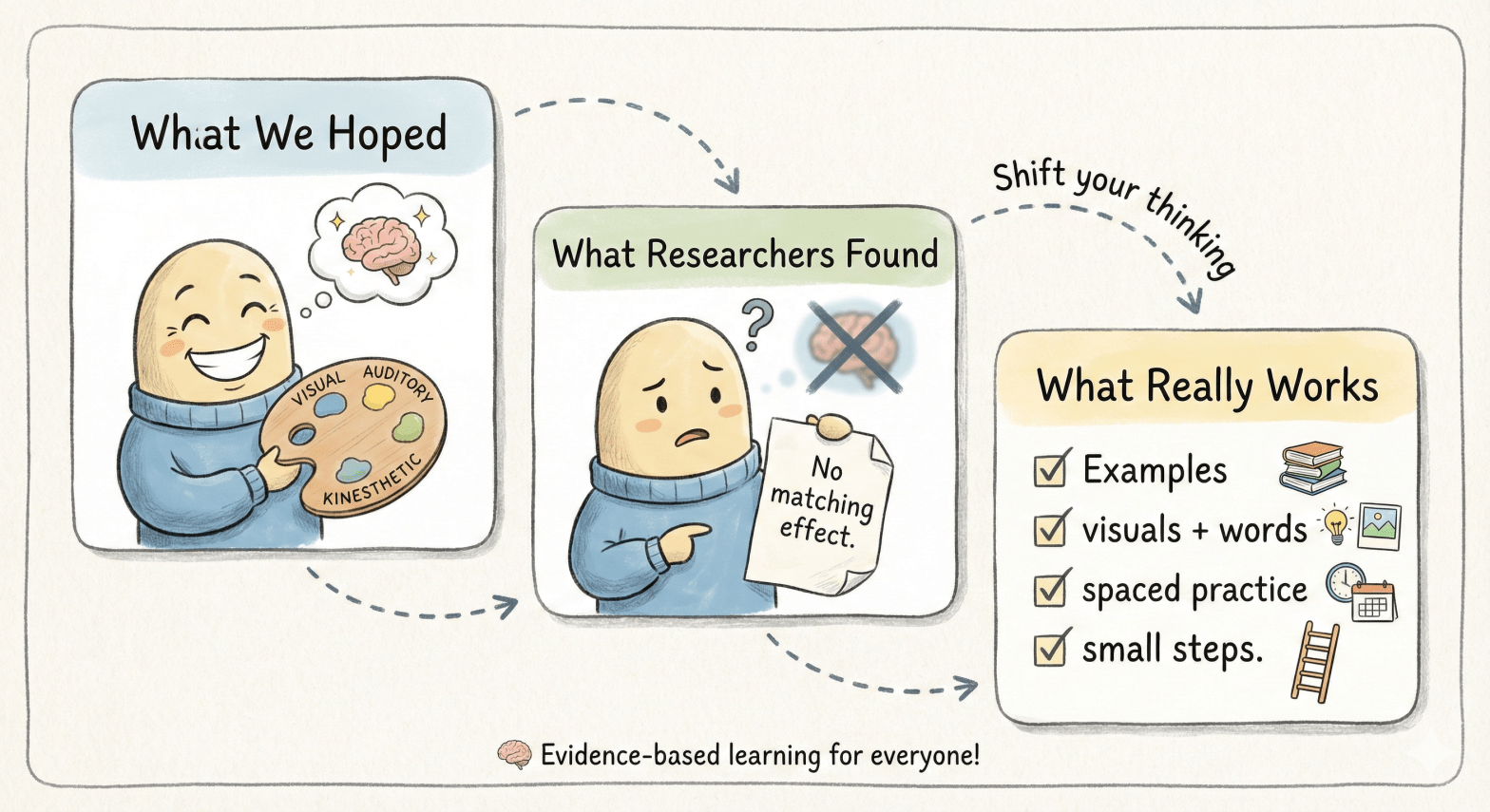
You’re in a kickoff meeting. Someone suggests, “Let’s find out everyone’s learning style first. Then we can tailor the training.” Heads nod. It sounds thoughtful. It sounds learner-centered.And you feel that small, nagging voice: Is this actually a thing? If you’ve been in L&D for a while, you’ve probably been in that room. It feltContinue reading "Debunking Learning Styles: What The Research Really Says"
Take Back Your Feed: A Simple Guide to Getting Started With RSS (Even If Tech Intimidates You)
Most of us are drowning in information. Emails. Social feeds. Notifications piling on notifications. You look away for one minute and miss three posts from a writer you actually wanted to read—because an algorithm decided you needed fourteen kitchen remodeling hacks instead. There's a better way to keep up with the things you care about.Continue reading "Take Back Your Feed: A Simple Guide to Getting Started With RSS (Even If Tech Intimidates You)"
The Testing Effect: Why Retrieval Practice is Your Most Powerful Learning Tool
The Lie We Tell Ourselves Sarah's quarterly review went well. Her compliance training program had a 94% completion rate. Everyone passed the quiz. Leadership was pleased. Three months later, a manager made a comment that clearly crossed the line. Nobody reported it. When HR investigated, five employees gave the same answer: "I didn't know thatContinue reading "The Testing Effect: Why Retrieval Practice is Your Most Powerful Learning Tool"
The Dangerous Allure of Distraction: Why Seductive Details Can Derail Learning (and When They Don’t)
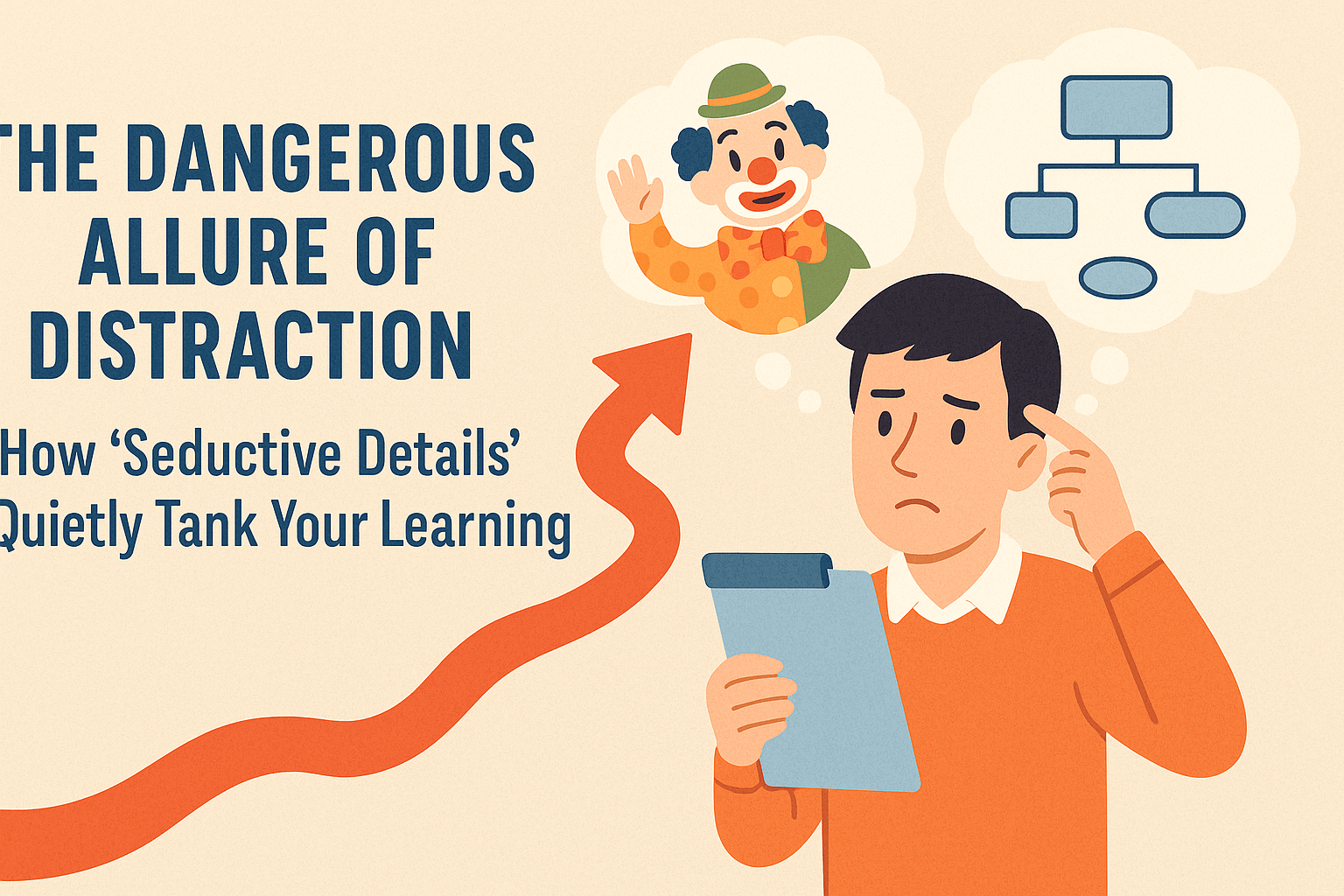
NOTE: I've updated this post from the previous version to incorporate some new research shared by Julie Dirksen & Will Thalheimer. Every learning designer knows the temptation. You’ve built a solid course… but it still feels a little flat.So you add a funny story.Or a dramatic photo.Or a splash of background music because “engagement!” AndContinue reading "The Dangerous Allure of Distraction: Why Seductive Details Can Derail Learning (and When They Don’t)"
The Right Kind of Difficulty: Why Worked Examples Beat Practice for Novices

Evidence-Based L&D Series: Article 3 of 8 Picture Maria, three weeks into her new role as a financial advisor. Her manager has just assigned her first real client—a 52-year-old teacher who needs retirement planning. Maria opens the spreadsheet. Stares at it. Closes it. Opens the training manual. Scans for the formula. Tries a calculation. GetsContinue reading "The Right Kind of Difficulty: Why Worked Examples Beat Practice for Novices"
Why Harder is Better: The Surprising Science of Desirable Difficulties

The training session crushed it. Ninety-four percent completion. Satisfaction scores at 4.8 out of 5. Your VP sent a congratulatory email. Three months later? Those same learners failed the audit. Couldn't recall key steps. Couldn't apply the principles they'd supposedly mastered. What happened? You fell into what cognitive scientist Robert Bjork calls the fluency trap.Continue reading "Why Harder is Better: The Surprising Science of Desirable Difficulties"
AI Can Help Us Be More Human: The Director’s Job

AI has become the loudest voice in every room right now. Especially in learning and development. The headlines promise revolution. The vendors promise automation. And many of us quietly wonder what happens to our own value when machines can generate courses, videos, and entire learning modules faster than we can write a learning objective. ButContinue reading "AI Can Help Us Be More Human: The Director’s Job"
Friday Finds – Better endings, smarter work, and your new AI research sidekick
Friday Finds – How to end better, learn smarter, and research faster “There is only one success—to be able to spend your life in your own way.” — Christopher Morley I’ve always liked that saying: you either win or you learn. Lately, I’ve been doing a lot of learning. The kind that comes with friction — theContinue reading "Friday Finds – Better endings, smarter work, and your new AI research sidekick"
Stop Overloading Your Learners’ Brains: A Practical Guide to Minimizing Extraneous Cognitive Load

Marcus spent six weeks building the perfect compliance training for his company's 2,000 employees. Interactive scenarios. Animated compliance mascot. Video testimonials from leadership. Gamified quizzes with leaderboards and achievement badges. Custom dashboard with real-time progress tracking. Background music to "enhance focus." (spoiler: that usually backfires unless it serves a clear instructional or motivational goal). CompletionContinue reading "Stop Overloading Your Learners’ Brains: A Practical Guide to Minimizing Extraneous Cognitive Load"
Workflow Automation for Beginners (and Why L&D Pros Should Care)
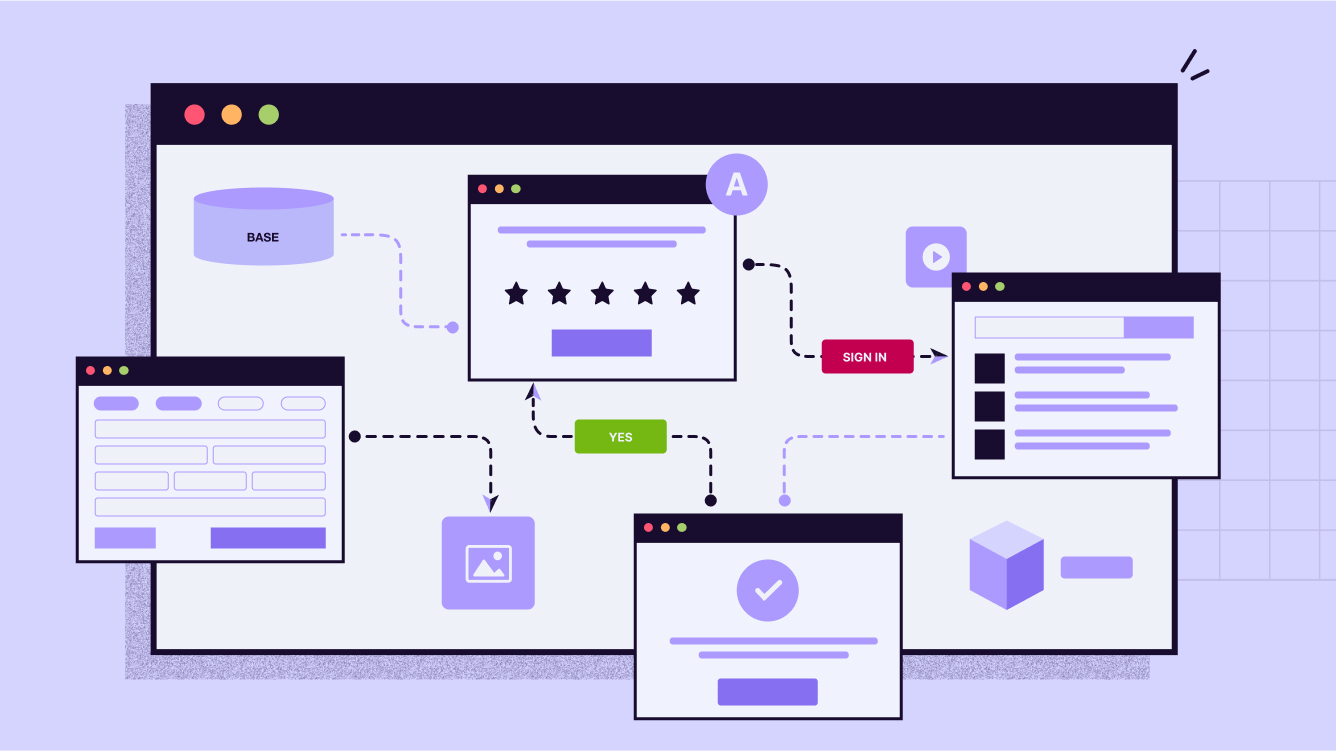
If you’ve never heard of workflow automation, don’t worry—you’re not alone. The phrase sounds like corporate jargon, but at its heart, it’s simple: workflow automation means teaching your tools to do the boring, repetitive steps for you—automatically. What Is Workflow Automation? Imagine you’re making coffee. Normally, you grind beans, fill the filter, measure water, pressContinue reading "Workflow Automation for Beginners (and Why L&D Pros Should Care)"
 Mike Taylor
You must be logged in to post a comment.